Interviewed by Tracey Manailescu, WPIC Co-founder of The Wedding Planners Institute of Canada Inc.
Each month, WPIC is proud to shine a spotlight on one of our incredible alumni who is making an impact in the wedding industry through creativity, professionalism, and an unwavering commitment to their couples.
This September, we are delighted to introduce Jodie Garneau, WPICC, DWC owner of Thistle and Thorne Weddings. With a thoughtful approach to wedding planning, a passion for creating meaningful celebrations, and a reputation for delivering seamless experiences, Jodie has built a business that reflects both heart and expertise.
From crafting unforgettable wedding days to building genuine relationships with her couples, Jodie exemplifies the professionalism and dedication that define the WPIC community. We asked her some questions to help us learn more about her journey, what inspires her, the lessons she’s learned along the way, and her advice for fellow wedding professionals.
Let’s get to know September’s WPIC Planner of the Month, Jodie Garneau.
The Launching House
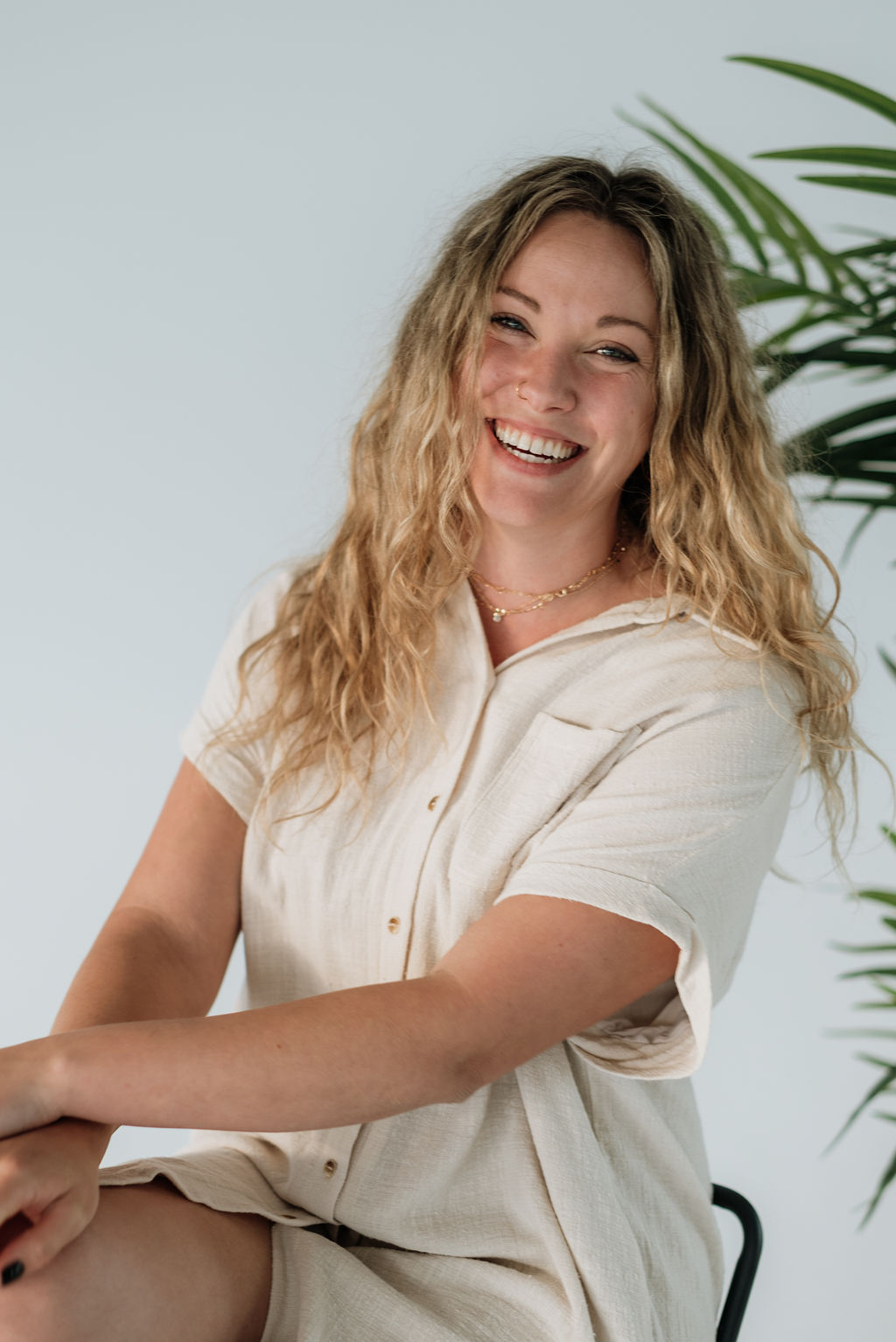
Jodie is the founder of Thistle & Thorne Weddings, planning immersive, experience-driven celebrations across British Columbia’s mountains, coastlines, and vineyards, with growing work in Toronto and Montreal. The business has offered destination weddings for years as well, with a 2027 trip already on the books to Mallorca, Spain. She studied business management at UBC, with a minor in psychology, and credits a solo exchange semester in Glasgow with catching the travel bug that’s shaped how she works ever since.
After graduating, a bartending interview at a local golf course turned into her first wedding coordinator role, followed by two years as assistant coordinator at a high-volume venue — nearly a hundred weddings a year within the same four walls — before the industry’s rigid hierarchies pushed her to build something different.
She launched Thistle & Thorne with no savings, the same day she found herself unexpectedly unemployed, and landed on the company name on a drive to a music festival with her now-husband.
She built the business through the pandemic by launching a collaboration offering helicopter and seaplane elopements before growing her team as full-scale weddings returned.
Today, most of her team has been with her for more than five years in a culture deliberately built without hierarchy. No one is called “boss,” Jodie included. She’s simply known as “Head Wizard,” and every team member—from the assistant placing
place cards to the lead planner running the event—is trusted as the expert in their piece of the day.

Miranda Anderson Photography
Thistle & Thorne Weddings is known for creating thoughtful, personalized celebrations in British Columbia’s incredible landscapes. How do you balance showcasing the natural beauty of a venue while still ensuring each wedding feels completely unique to the couple?
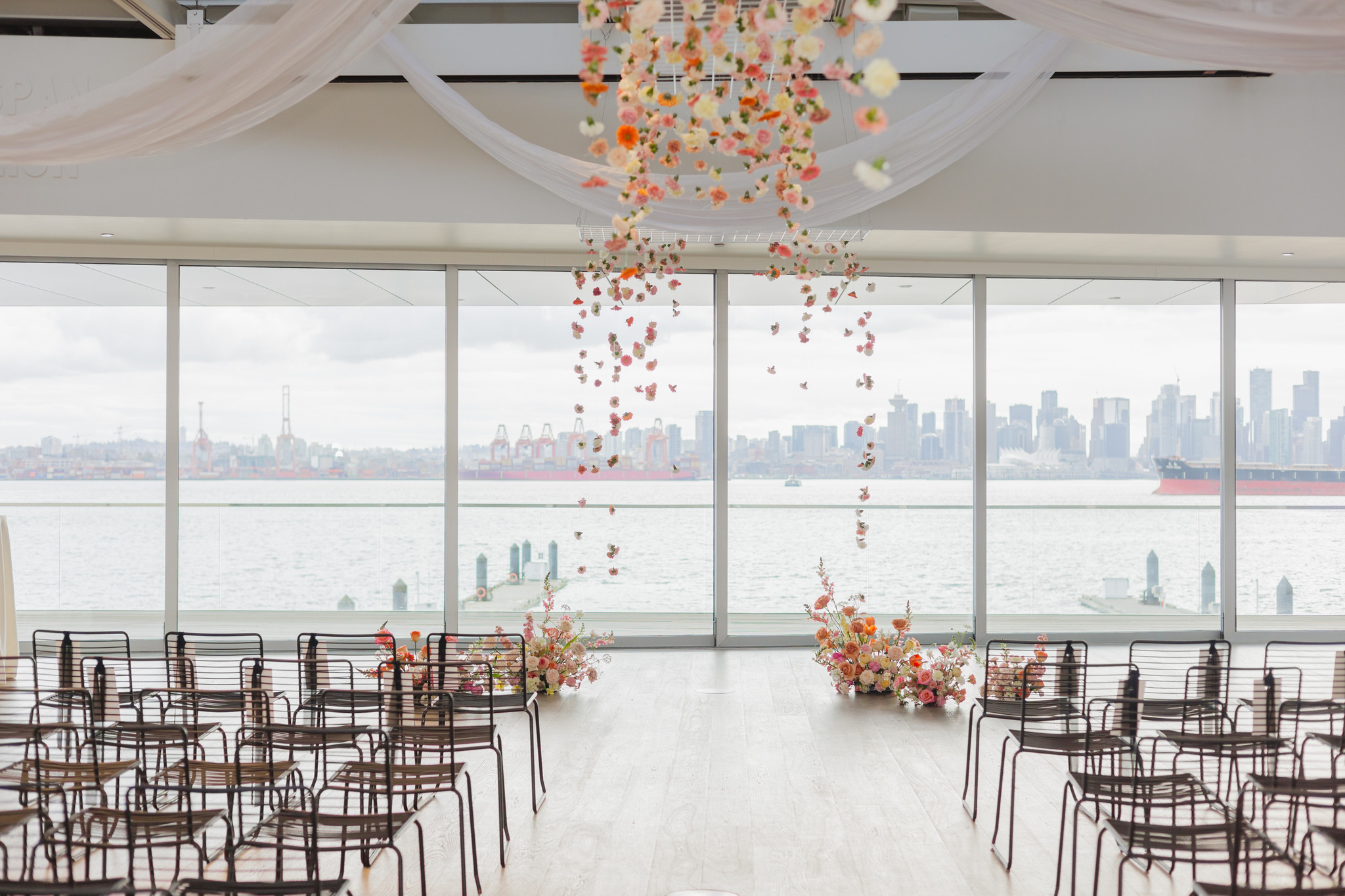
Honestly, the landscape does a lot of the heavy lifting for us here, BC handed us mountains, coastline, and vineyards, but also rainforest, and in the Okanagan, something that borders on desert. We’re talking actual tumbleweeds. Almost nowhere else can you plan weddings across that much range without leaving one province. So, our job isn’t to compete with any of that backdrop, it’s to make sure the couple doesn’t disappear into it. We treat the view as the stage, not the show. Every design decision — florals, table settings, even where we place the ceremony itself gets built around who this specific couple is, not around what looks good in a photo of the venue. Take a stark, high-elevation mountain backdrop: one couple will interpret that in a rustic, organic, nature-forward way, and another couple will take the exact same view and go sharp-lined, architectural, contemporary. Same landscape, two completely different weddings. The view stays constant — the landscape is genuinely malleable once you make the right design choices around it, and that’s where a couple’s actual personality gets to show up instead of getting flattened by the backdrop.
Chuunice Photography
British Columbia offers everything from mountaintop ceremonies to coastal celebrations and vineyard weddings. What are some of the biggest planning challenges unique to weddings in BC, and what advice would you give planners working in these diverse environments?
British Columbia looks like one region on a map, but it doesn’t function like one. A sprawling city has grid streets, highways, and transit that get you anywhere in it reasonably fast. BC has mountains, which means we don’t get from A to B directly — we meander around, over, or through them, so two locations that are close “as the crow flies” can be hours apart by road. That geography creates what I’d call wedding micro-economies: pockets of BC where the vendor landscape simply doesn’t scale the way it does in a big city.
Vancouver Island and the Gulf Islands are a good example.
Most of our weddings there involve one or even two ferry crossings in a single day, and the rental companies based on the Island have a fraction of the inventory available on the mainland. So instead of working with one rental company like you might for a city wedding, we’re often coordinating three or four just to pull off a single couple’s vision. The Sea-to-Sky corridor and the Sunshine Coast have their own version of this — some spots require a ferry even though they’re technically mainland, others (like the drive to Pemberton) are just winding, cliffside roads through mountain passes. And once you’re at the venue, most of these backdrops don’t have Uber access unless you’re in Vancouver proper, so getting guests there and back becomes its own logistics project.
Then there’s the environment itself: washed-out roads, fallen trees, floods, droughts — we’ve dealt with all of it in the past few years, sometimes at venues with no cell service or potable water. The job is still to deliver a high-polish, high-touch, luxury experience regardless.
We have a wedding this August at a heli-ski lodge in Fernie which is a mountain town reachable only by narrow, winding gravel switchbacks that can’t accommodate large delivery trucks. We’re bringing rentals in from Alberta, several hours away, and had to coordinate directly with the shuttle and rental companies on vehicle size, because the road itself dictates multiple smaller trucks instead of one big one. That’s a completely different planning problem than anything you’d encounter in a city and honestly, it’s one of my favourite parts of working in this province. Every location asks you to solve a different puzzle.

Chuunice Photography
After planning so many weddings, what’s one piece of advice you wish every engaged couple knew before they started the planning process?
My advice to another planner working in these environments: don’t treat the backup plan as a downgrade and build in far more lead time and redundancy for vendor logistics than you think you need. If your rental order depends on one truck making it up one road on one day, you don’t have a plan, you have a hope.
The best weddings aren’t the ones that check every traditional box. They’re the ones that feel unmistakably like the people getting married. So much of wedding planning starts from a checklist of expectations — the venue everyone books, the timeline everyone follows — and couples spend months negotiating around rules that were never actually theirs to begin with.
The couples who end up happiest are the ones who get clear early on about what genuinely matters to them, then build the budget and the day around that, instead of trying to fit their relationship into someone else’s template.

The Launching House
Every planner develops systems and habits that make them more successful. What’s one planning strategy, workflow, or client communication tip that has made the biggest difference in your business over the years?
Systems, honestly. Creativity is what people see, but systems are what make great planning possible. Once you have multiple planners running events under one company, consistency is what couples are actually paying for no matter who on our team they end up working with, the experience needs to feel the same.
Since 2020, we’ve built our workflows around Aisle Planner as our client management system, which lets us build out support documents for couples and move quickly through the data-entry-heavy side of planning, so the humans on our team can spend their time on people and experience instead of paperwork.
The other big shift was realizing no one person can do it all. My business hit its real growth spurt once I stopped trying to hold every function myself and started building out a team and a network of collaborators instead, letting me focus on what I actually do best while people who are better at their piece handle theirs, all pointed at the same goal.
Destinye is my right arm and right leg. She runs our team scheduling and is generally the person who makes things happen day-to-day.
Coral is our Montreal-based guest experience manager, making sure guests at our more logistically complex events have what they need, while also being incredible admin support for me and our clients.
Beyond that, we work with an SEO specialist, a social media manager, bookkeeping, accounting, and legal support, someone who manages our blog, and we’ve partnered with Jocelyn Bacon of Sea to Sky Elopements so we can support couples with smaller guest lists and smaller budgets too, not just the big, logistically heavy weddings we’re often known for.
None of that works if it’s hierarchical. It works because everyone’s genuinely good at their piece, and I trust them to run it.
Van Geyt Photography
Looking ahead, what trends or shifts are you seeing in the wedding industry that excite you most, and how do you think planners can continue to elevate the client experience while building sustainable, profitable businesses.
If I’m honest, the shift shaping our business most right now isn’t a look, it’s a generation. Our client base has moved from primarily millennial to primarily Gen Z, and that’s changing almost everything about how we plan. Gen Z wants their wedding to be an experience, not a performance. That’s actually where slow weddings comes in for us. It’s not a separate trend, it’s the same underlying shift.
Couples aren’t asking “what does a wedding look like,” they’re asking “what do we want to feel, and what do we want our guests to feel with us.”
Practically, that shows up as multi-day, immersive weekends instead of a single four-hour reception, couples want real time with their people, not just one evening of it. It also shows up in design: our couples are getting braver. They’re choosing things that look like art and actually reflect who they are, rather than recreating a Pinterest board curated by an algorithm instead of by them.
That takes real nerve in an industry that’s historically rewarded predictable, photogenic choices.
For planners, I think this is one of the most encouraging shifts in years, because it means we get to build businesses around helping people make something genuinely memorable, rather than helping them execute someone else’s aesthetic. It’s also just a better foundation for a sustainable business.
You’re not chasing trend cycles, you’re building relationships with couples who trust you to help them figure out what they actually want, which is where the luxury-as-experience-not-expense piece comes back into.







Leave a Reply